
Waterloo Search Notes That Hold Up
Log every useful match. Record the portal, field, date, and custodian. Save the identifier too. A case, parcel, instrument, volume, page, or edition number lets a later search be repeated exactly, which keeps a tentative name match from hardening into fact. That discipline pays off when Waterloo records hop between a city layer, a county office, a library reader, and the state archive.
Finding Waterloo Residents Step by Step
Start with what you already know. A full address can be checked in Waterloo's city address layer. A full name fits elsewhere. The Iowa Courts docket and the Iowa Land Records party index both take one. Remember that ownership, registration, and occupancy are different facts. This residents directory works best as a chain of dated clues, not a single answer.
- Normalize the street number and name with the city address layer or USPS.
- Check the county property route for an owner, parcel, and mailing address.
- Search deeds by party, date, document type, and Black Hawk County.
- Use court or voter tools only with the details each official form requires.
- For past households, move to city directories, newspapers, probate, and archival books.
The city's Address Points layer shows the structured starting point.
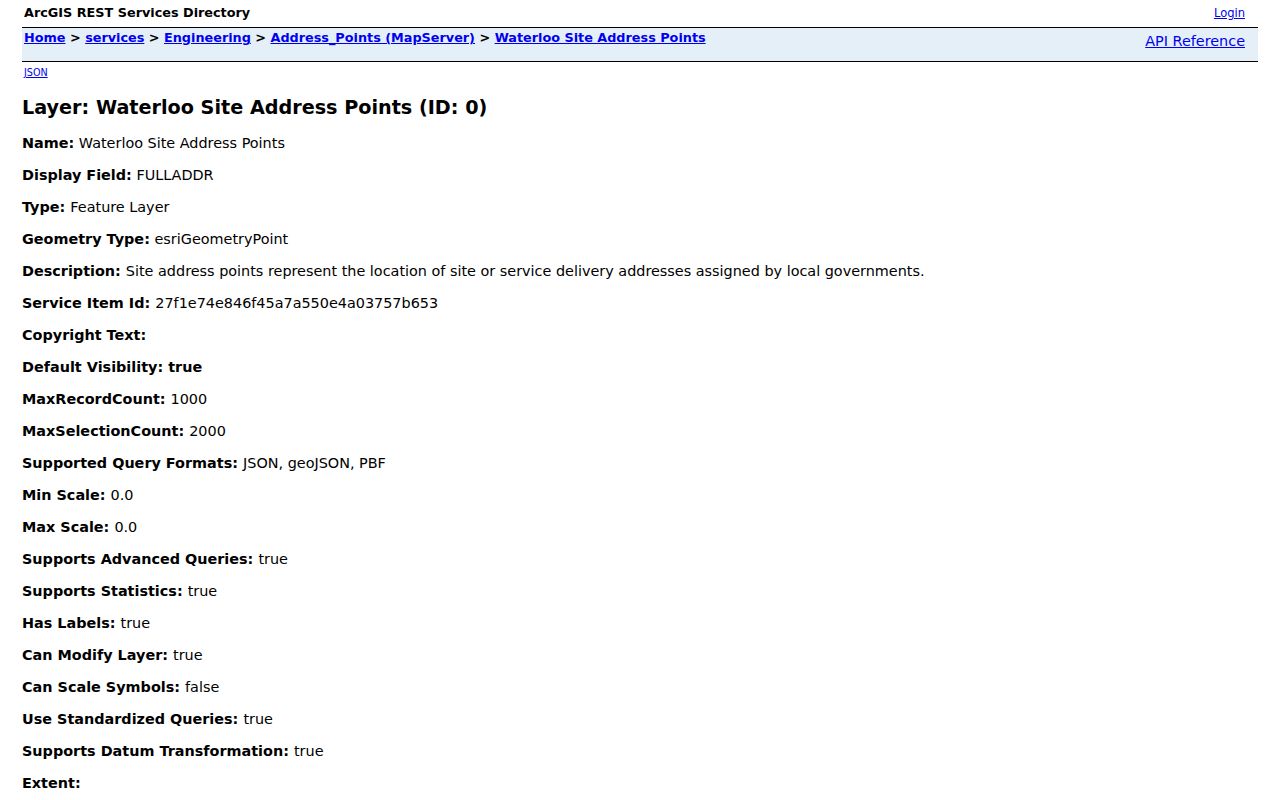
Its fields keep an address and a person distinct.
Waterloo Address Records Come First
The City Engineering layer keys on FULLADDR. Street number, full street name, municipality, ZIP, postal community, status, and point type come with it. Types include House, Utility Asset, and other coded locations. Utility features are not homes. Status values run from Current through Pending, Temporary, Retired, and Other, and those codes keep a retired point or utility feature from posing as a household lead. The REST query returns JSON, GeoJSON, or PBF and caps a request at 1,000 records. It validates a civic place, not who lives there.
| Field | Meaning in a Waterloo search |
|---|---|
| FULLADDR | City-formatted complete address |
| MUNICIPALITY / Post_Comm | Legal municipality and postal community |
| POINTTYPE | House, utility asset, or another feature |
| STATUS | Current, pending, temporary, retired, or other |
| Zip | Postal code attached to the point |
A parcel is mapped land, not a household. Once the address check is done, turn to the county office that holds the record answering the real question.
Waterloo Residents Records Offices
Black Hawk County splits its records among offices. The Assessor appraises property but collects no tax. The Auditor calculates taxes and keeps the transfer books, while the Treasurer takes installments and runs a parcel search. The Recorder holds recorded transfers and certified instruments, so Waterloo residents should confirm each exact fact with the custodian who owns it.
Black Hawk County Recorder
316 E 5th St, Room 208
Waterloo, IA 50703
319-833-3012
The Recorder page confirms its land and vital-record routes.
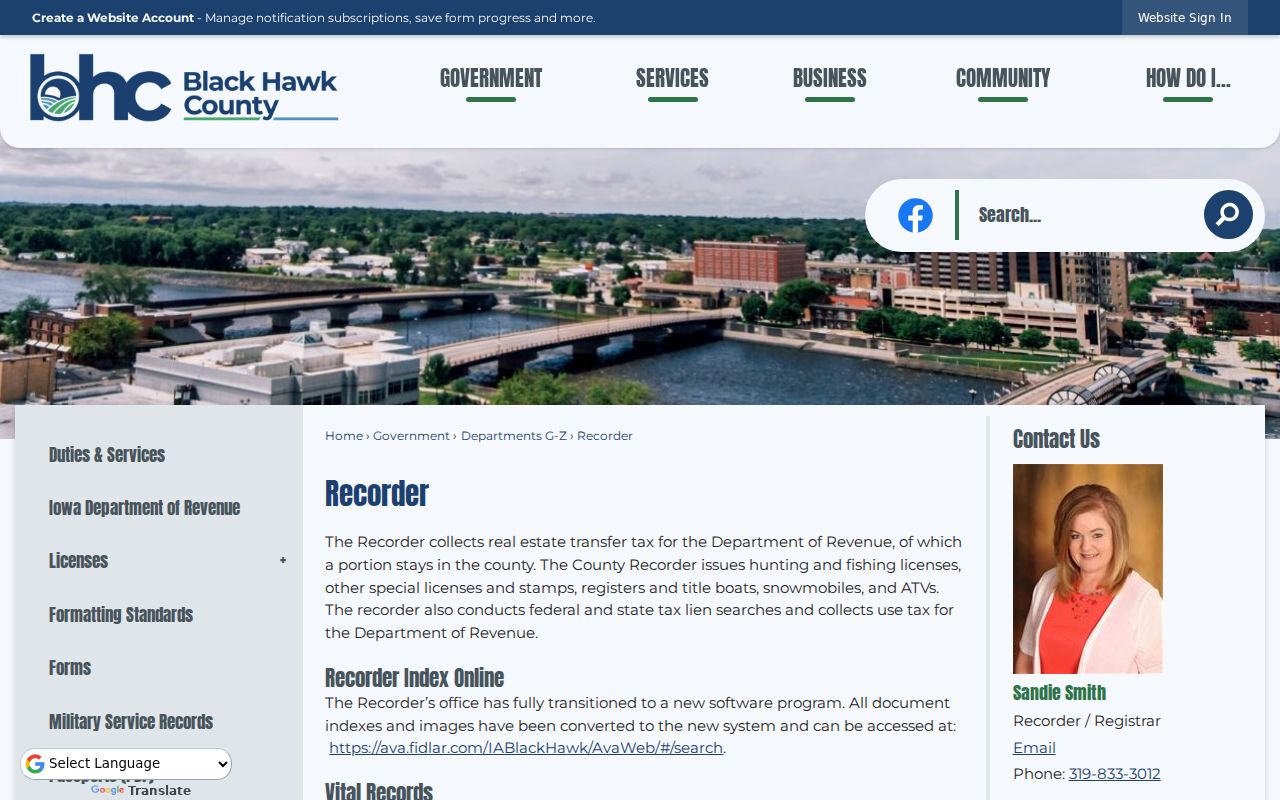
When AVA shows no old span or usable image, the office counter is the fallback. Hours are weekdays, 8:00 a.m. to 4:30 p.m.
Waterloo Deed Directory Searches
Iowa Land Records covers all 99 county recorder indexes. Pick Black Hawk County. Then narrow the results with a recorded date range and a grantor or grantee name. A grantor gives an interest away. A grantee takes one. Document filters cover deeds, mortgages, releases, liens, easements, contracts, plats, and other instruments, and basic searching is open without registration while advanced controls and saved work may require an account. Iowa Land Records publishes no earliest online date for Black Hawk, so older work belongs with the Recorder and the archival series.
| Search control | Local use |
|---|---|
| County | Required; select Black Hawk |
| Recorded dates | Narrow a likely transfer period |
| Party | Choose grantor or grantee and enter a name |
| Document type | Limit deeds, mortgages, liens, or plats |
| Image filter | Show entries with an image |
The Iowa Land Records search exposes these controls.
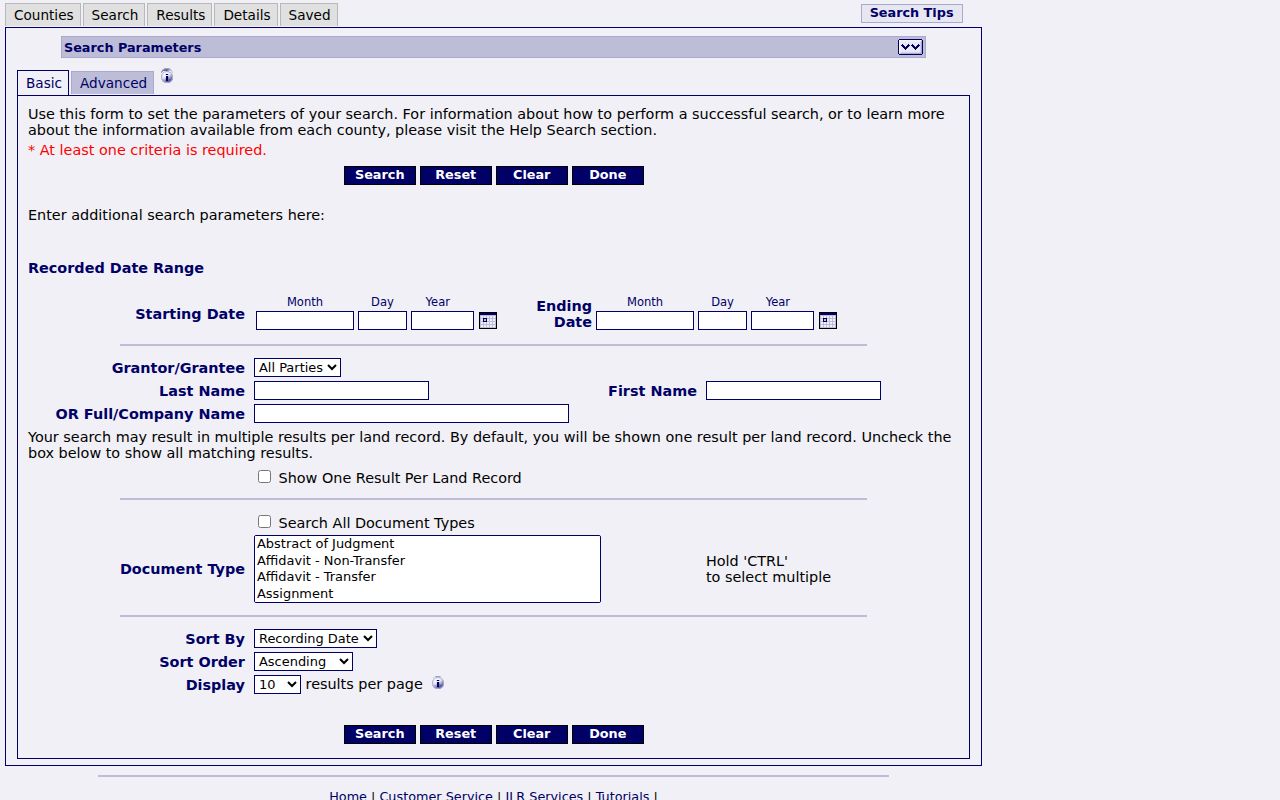
The “Show One Result Per Land Record” box condenses party matches. Clearing it shows every matching party.
Waterloo Directory Sources Compared
No current roll lists every person in Waterloo. Each source covers a limited subject and date. A property roll points to an owner, not every occupant, and a voter lookup confirms a registration only when the required facts match. A deed index names parties to instruments, while court results identify case parties rather than working as an address book.
| Waterloo source | What it confirms | Keeper | Route |
|---|---|---|---|
| Address points | Civic address and mapped status | City Engineering | Free REST layer |
| Property mapping | Parcel and assessment context | County Assessor | Beacon and office |
| Recorded instruments | Parties, type, recording date | County Recorder | AVA, ILR, counter |
| Voter status | A detail-matched registration | Iowa SOS | Online form |
| Old directories | Past listing by edition | WPL and Grout | Library or archive |
Commercial people-finder material can merge stale files and hide the source. Official rolls are narrower. They still name a custodian. When proof matters, get the original or certified copy, and remember that Black Hawk's real-estate roles are not interchangeable, a distinction that keeps a tax-mail address from being mistaken for a deedholder or occupant.
Waterloo Court Record Lookup
The Iowa Courts Electronic Docket Record Search offers a free public docket searchable by name, date of birth, case ID, citation number, county, and case type. Same-name hits need care. Match independent details. Read the disposition too, because a filing is never proof of the claim inside it. Some documents and fields sit only at a courthouse terminal or behind subscriber access. Sealed and confidential material stays out of public results. Start at the official Iowa Courts search.
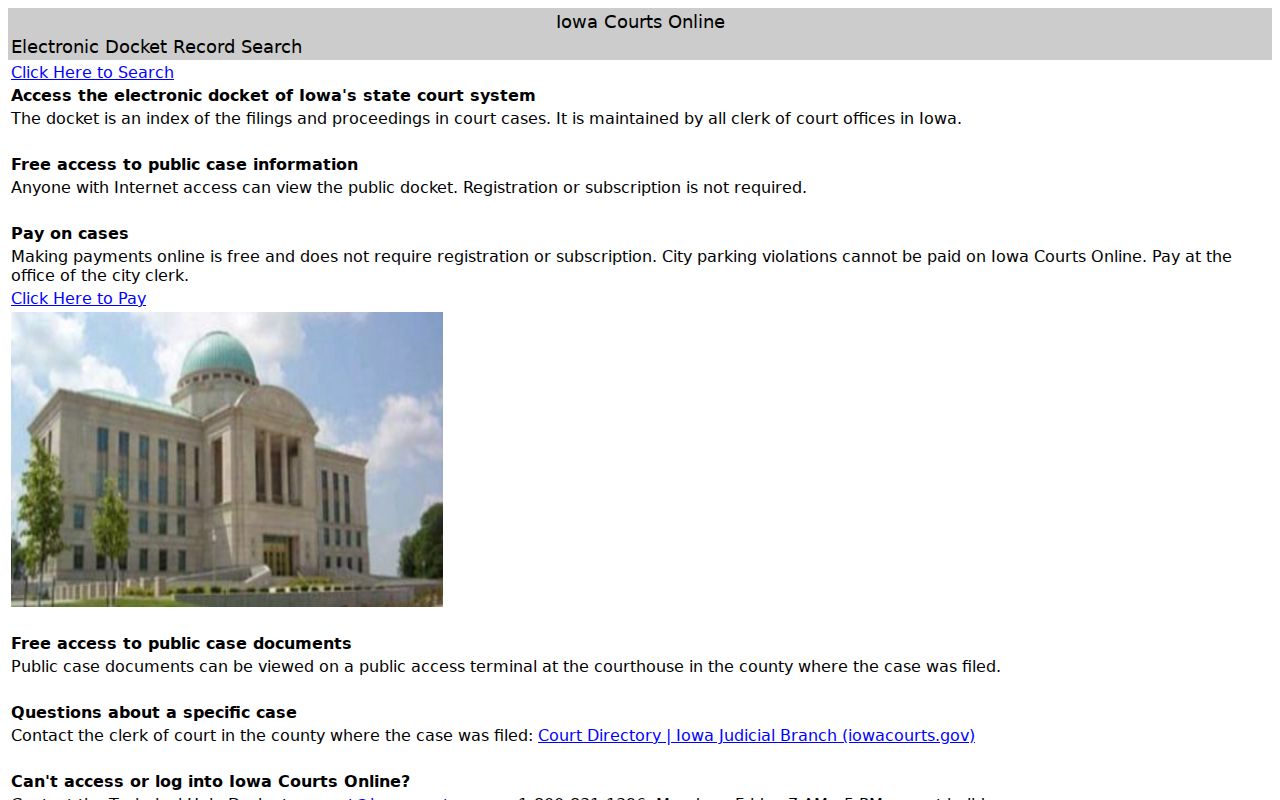
Read the case number, county, type, party role, status, and disposition together. Only then tie a result to a Waterloo resident, and for one named person, use the focused Waterloo resident lookup workflow.
Waterloo Vital Records Access
Waterloo families tracing births, marriages, and deaths run into a state system that stays closed. Iowa began statewide vital registration on July 1, 1880. The state registrar runs entitlement rules for certified copies. Iowa Code section 144.43 opens archival records by age alone: 75 years for birth, marriage, and divorce records, and 50 years for death, unless an entitled person qualifies sooner. Iowa HHS posts a $20 certified search fee. Its steps cover ID, relationship proof, notarization, mail, in-person, and approved vendors. An index hit is not eligibility. For current rules, use the Iowa HHS Vital Records page.
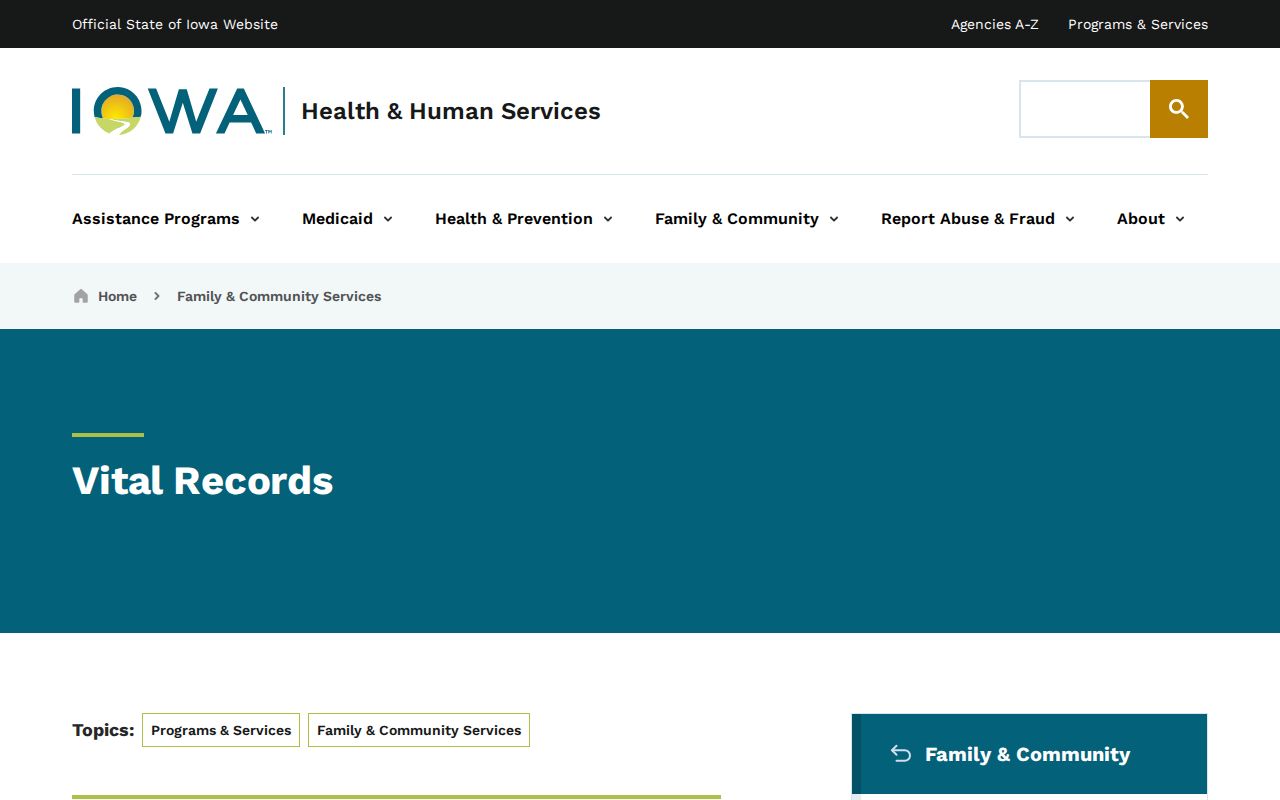
State and Recorder routes answer different custody questions.
Waterloo Voter Directory Limits
The state's voter form asks for first name, last name, ZIP, house number, and full birth date. It checks details you already hold. It is not a browseable Waterloo residents list. Iowa Code Chapter 48A opens registration records to the public within limits, excludes sensitive identifiers, bars commercial use of voter lists, and keeps requester logs public. A March 2026 state directive also stressed that residential and mailing addresses are not interchangeable. Iowa law lets a voter without a conventional residence use the place where that person regularly sleeps. The lookup answers one record at a time. Run a check through the official Iowa voter lookup.
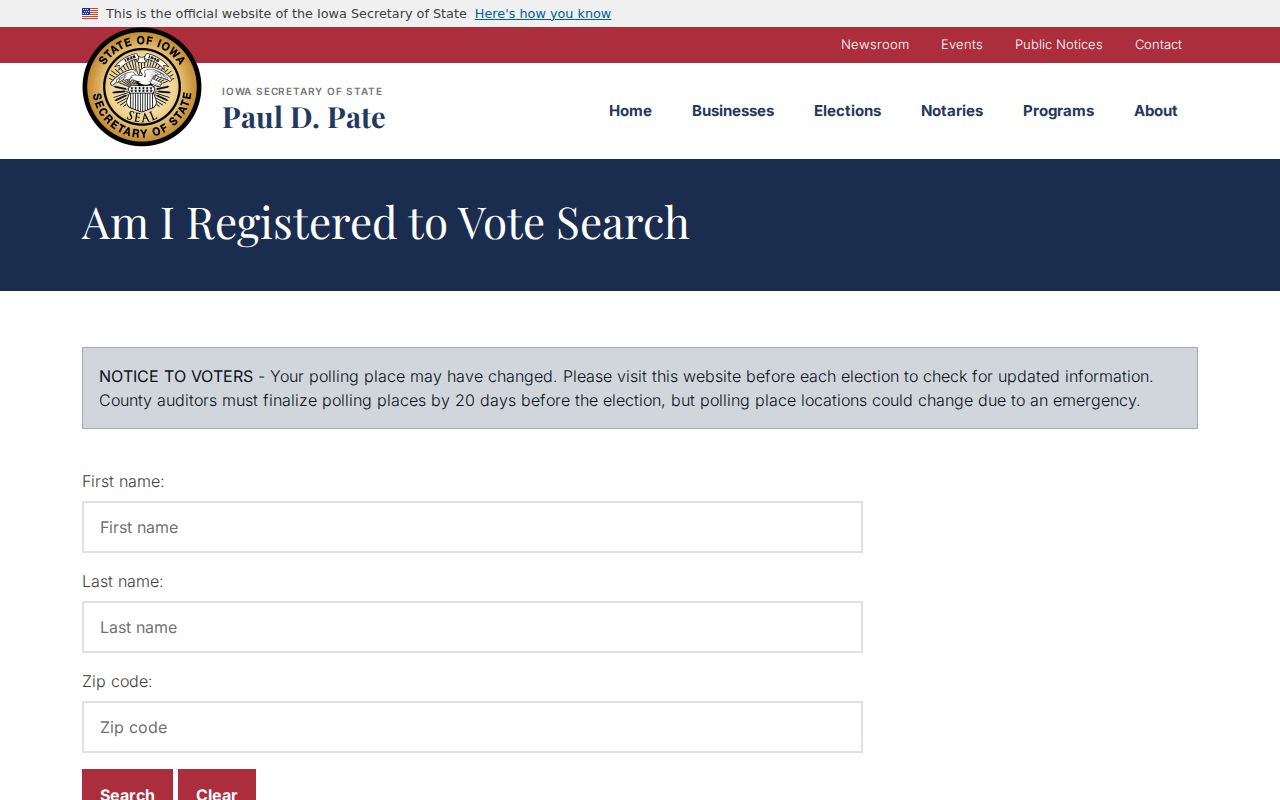
A match confirms election registration information, not property ownership or uninterrupted occupancy.
Waterloo Residents in Old Directories
Waterloo Public Library shelves city directories from 1873 through 1991, alongside newspaper and microfilm holdings. An edition can place a householder at an address. It may show a spouse or an occupation. It is still a snapshot. Comparisons across years reveal more than any one volume, since a skipped edition does not prove a move and an entry never replaces a deed or vital record. Grout holds recent volumes for 1998, 2000, 2003 to 2004, and 2006 to the present. Unlisted years are archive questions. They are not permission to assume continuous coverage, so check the detailed shelf on the Waterloo city directory page and start with WPL local history.
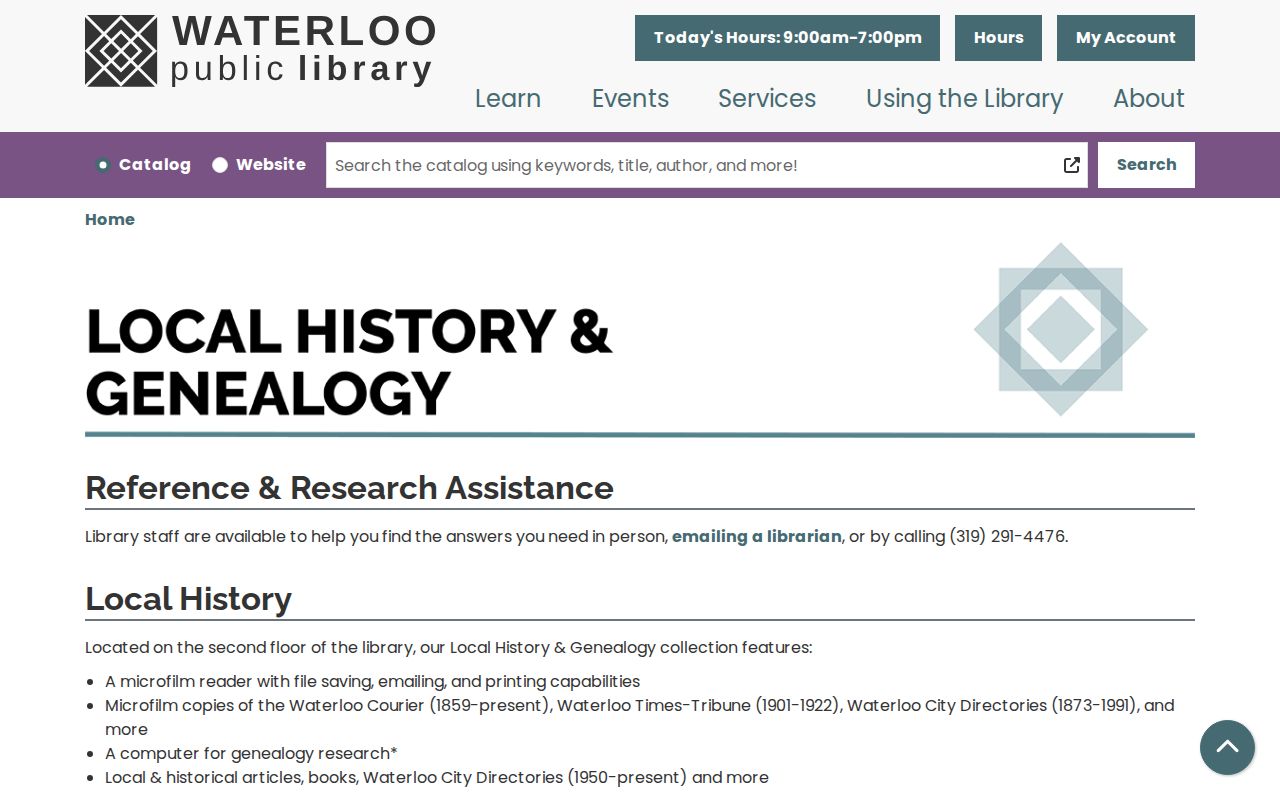
The library's microfilm reader preserves edition, date, and page.
Waterloo ZIP Directory Context
A Waterloo ZIP code does not always mean Waterloo. The postal city covers ZCTAs 50701, 50702, and 50703, yet the mail routes reach beyond the legal city line. Census guidance says the Waterloo postal area can pull in parts of Elk Run Heights, Hudson, and unincorporated Black Hawk County. Washburn makes the point plainly. It uses 50702 while still being counted as Washburn.
So a ZIP-only lookup can match the right mail route but point to the wrong jurisdiction. Run any full address through the USPS ZIP Code Lookup first. Then compare the municipality field against the postal-community field. That small double-check keeps a street directory entry honest.
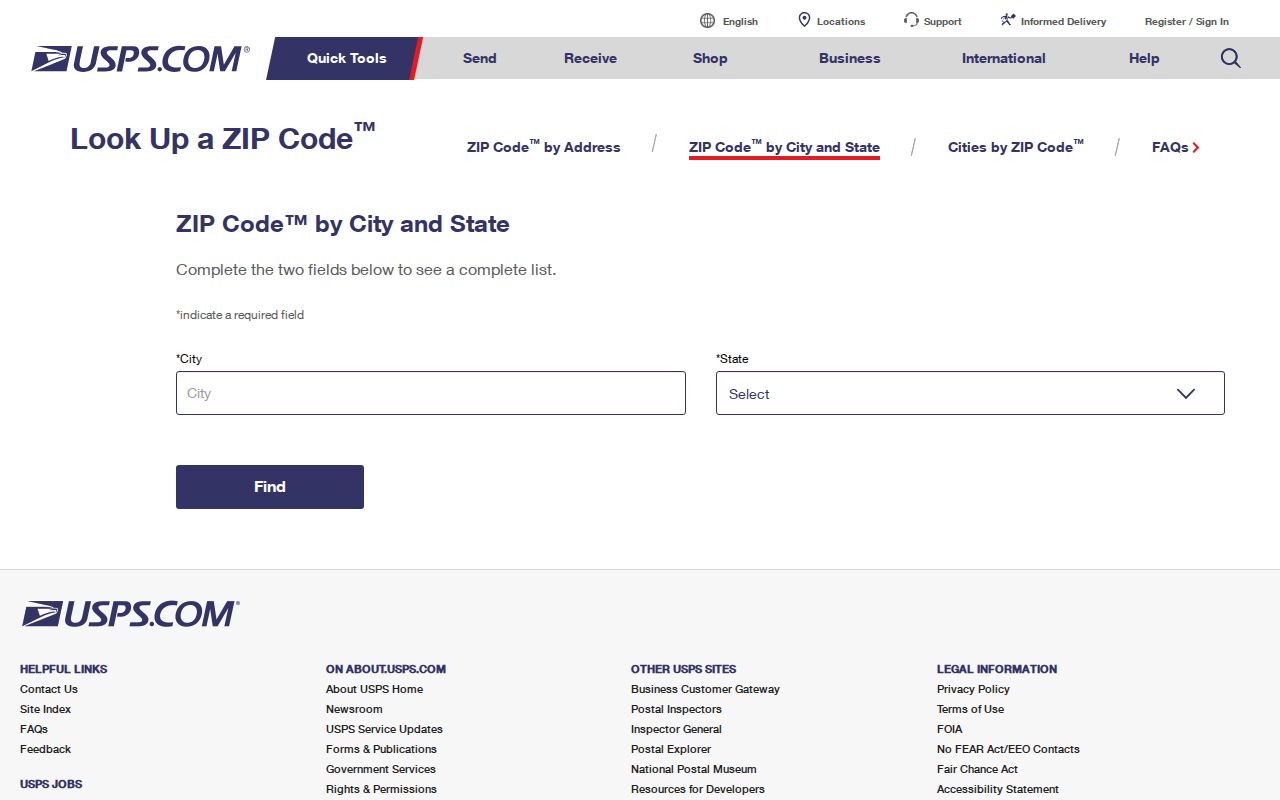
A route match does not prove who lives there.
Waterloo Custody Records Change
The Black Hawk County Sheriff's “Who's In Jail” roster is a current-custody source, searchable by name, charge, and booking date. An arrest is not a conviction. Custody status can change within hours. The state DOC and registry serve other purposes. Note the access date, verify status with the agency, and respect each system's own warnings. Never merge a custody notice into a general profile. The Black Hawk County jail roster shows the county route.
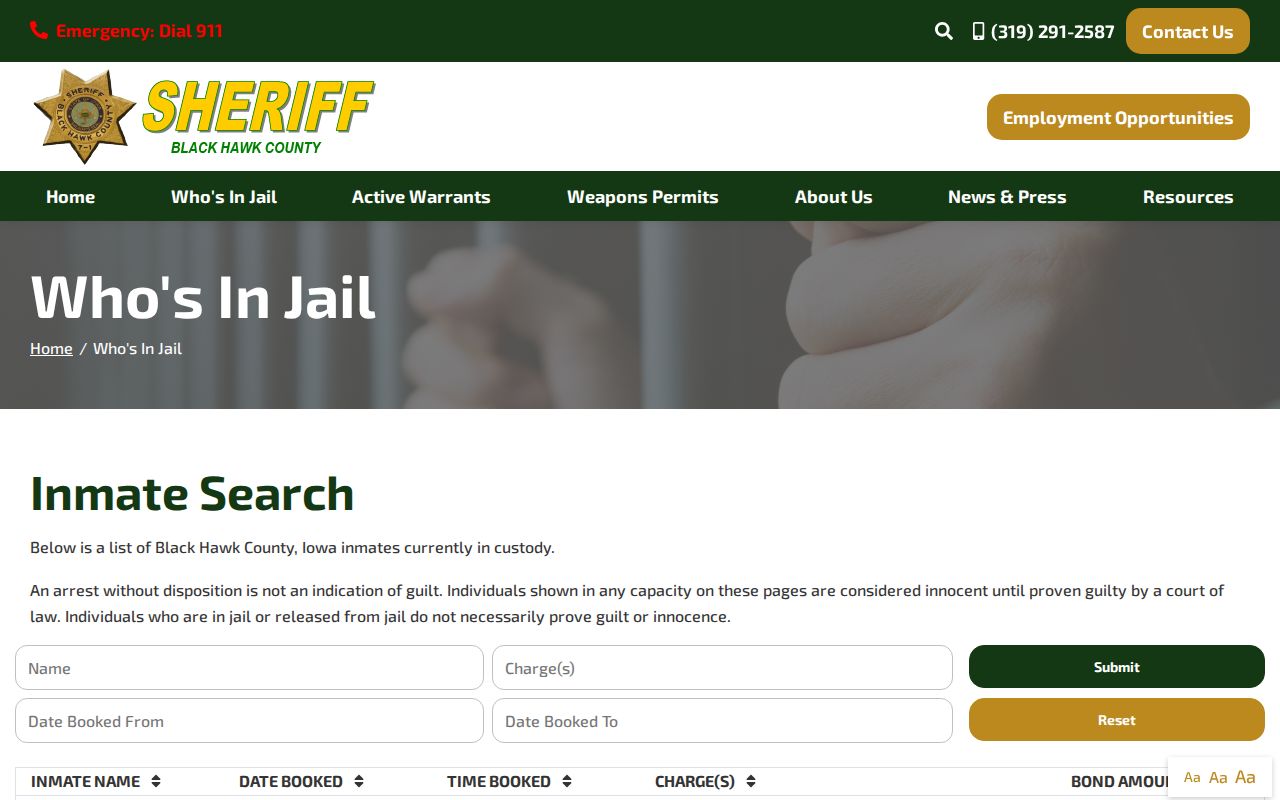
Its narrow scope keeps it separate from the main Waterloo residents directory.
Waterloo Record Terms Decoded
A handful of terms carry a search across city, county, and archive sources. Learn them before treating unlike records as equals.
- Parcel
- A mapped unit of land with an identifier, not a household.
- Roll
- A list kept for one purpose, such as assessment or registration.
- Index
- A finding aid that points to a record but may omit the full image.
- Criss-cross directory
- A directory organized by address rather than only by surname.
- Certified copy
- An office-issued copy authenticated by the legal custodian.
Note the type, keeper, edition, and access date.
Waterloo Records Cross Eras
Waterloo holds the county seat today. Cedar Falls had that role first. The Recorder's territorial origin dates to 1839, four years before Black Hawk County formed in 1843. Early land clues can predate the county books. A courthouse date does not start a series. Recorder books, AVA, Iowa Land Records, City GIS, library microfilm, Grout holdings, and State Historical Society series each preserve a layer.
These record groups bridge the eras. Abstracts lead into nineteenth-century deed and town-lot books. Probate, naturalization, marriage, directory, and newspaper collections can separate people with similar names. Auditor transfer volumes extend land and lot trails into the late twentieth century. Current AVA, land records, dockets, GIS, and HHS routes then take over. Note whether a source is an index, abstract, image, transcription, or certified copy. Each form carries different detail and authority.
State Historical Society compact-storage work limited some collections in 2026, and staff asked for appointments five days ahead. Confirm the repository, appointment, and availability before any trip. Legal custody of county records stays with the county even when an archival copy or microfilm sits elsewhere.
Protecting Waterloo Resident Records
Iowa Safe at Home gives eligible participants a substitute address and a confidential voter-registration path. It does not erase real-estate records. Court sealing follows its own rules. HHS entitlement, voter confidentiality, library patron privacy, and agency correction each follow distinct rules. Match the remedy to the custodian. One removal request never reaches every copy. The Iowa Safe at Home program explains its protections.
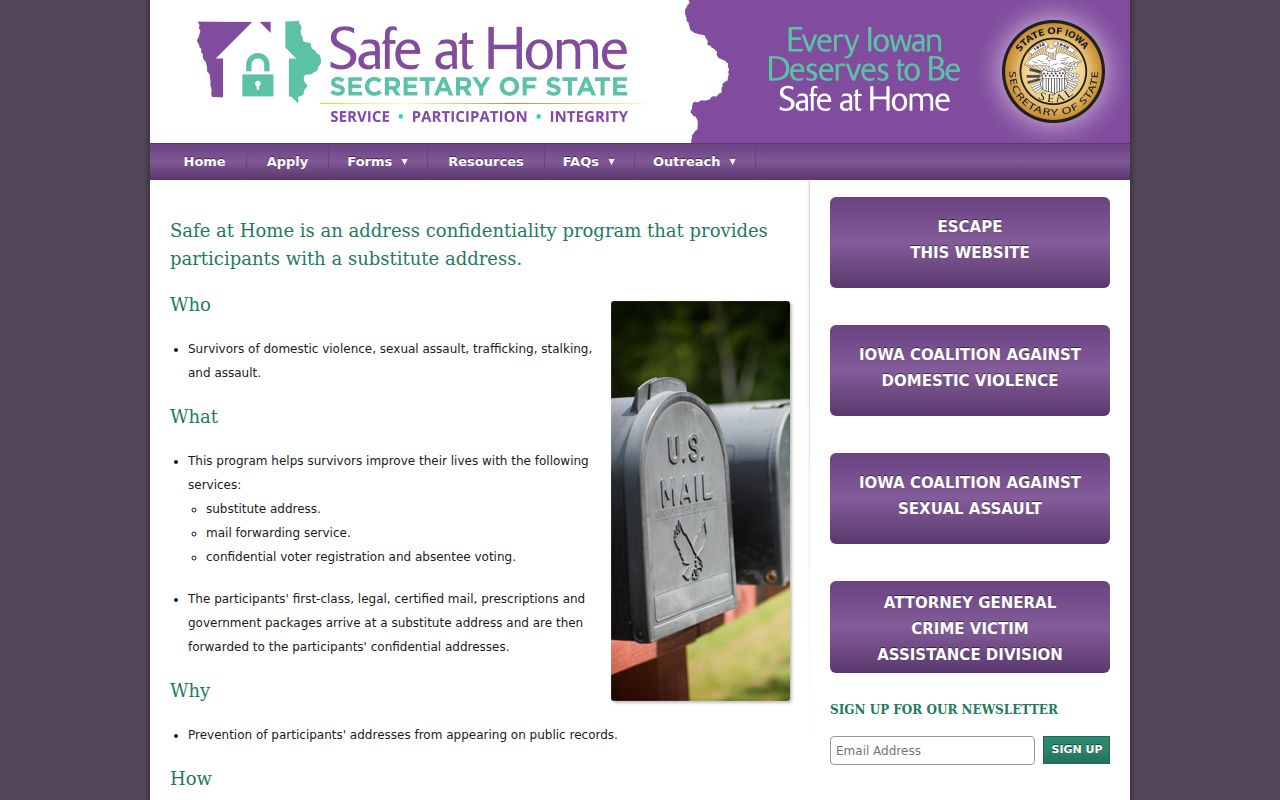
Safe at Home shields only the mailing and voter path.
Lawful use. Use Waterloo records for lawful personal research, never to stalk, harass, intimidate, or harm another person.