
Waterloo Directory Shelves by Year
Waterloo directory research begins with two complementary local collections. The Waterloo Public Library local-history desk describes city directories from 1873 through 1991 and also describes a 1950-to-present local-history range. The Grout Museum Archives and Library lists Waterloo volumes for 1998, 2000, 2003–04, and 2006 to the present. Those statements do not prove that every intervening edition exists. Record the exact year and repository before planning a visit.
| Collection | Years listed | Where held | Access route |
|---|---|---|---|
| Waterloo city directories | 1873–1991 | Waterloo Public Library | Local-history and microfilm desk |
| Later Waterloo volumes | 1998, 2000, 2003–04, 2006–present | Grout Museum | Appointment and reading room |
| Black Hawk County series | Varies from the nineteenth century | State Historical Society of Iowa | Series page or staff request |
| Waterloo newspapers | Courier from 1859; Times-Tribune 1901–1922 | WPL and UNI | Microfilm and databases |
The useful split is local: the library carries the long historical run, while Grout identifies recent editions that extend beyond it. An unlisted year should become a focused staff question. Ask whether the edition is bound, on film, unavailable, or held under a publisher title. Never assume continuous publication.
The Grout collection page explains its archives and library access.
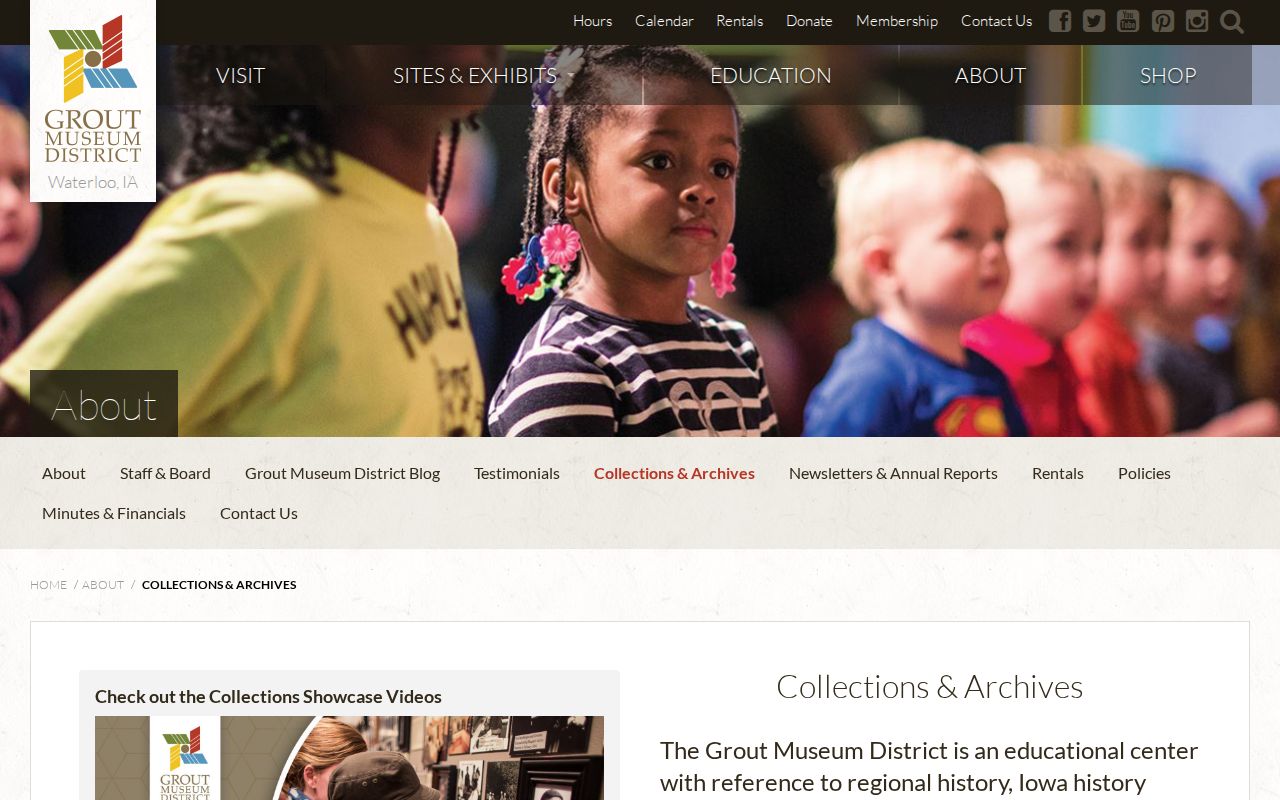
That page matters because Waterloo city directories are part of a wider appointment-based set of maps, photographs, plats, and family materials.
Search Waterloo Library Microfilm
A Waterloo Public Library card is required for the genealogy and microfilm computer. The local-history collection also points readers toward newspaper databases and Historical Cedar Valley. Staff can help identify an edition or film run, but capture enough detail to find the same page again: title, year, page, name as printed, address line, and whether the list is alphabetical or arranged by address.
The Historical Cedar Valley collection offers a digital local-history route.
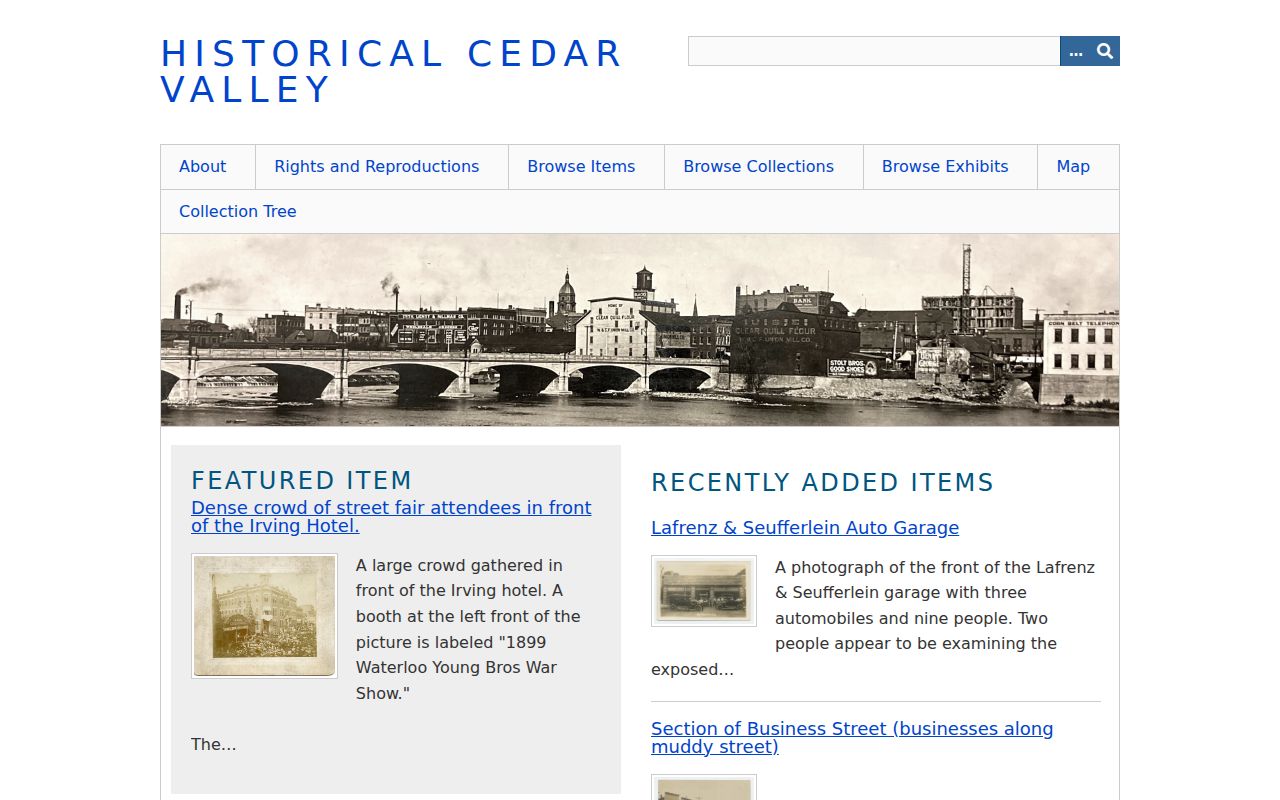
Digital search may reveal an item before a visit, but its holdings are not a complete substitute for the library shelves.
Decode a Waterloo Directory Entry
An entry is a compact lead, not a full biography. A line may give a name, spouse in parentheses, occupation or employer, and residence. Marks for boarding, residence, widowhood, or ownership vary by publisher and year. No non-sensitive Waterloo sample entry was opened during research, so no local symbol is assumed. Consult the edition’s key before expanding an abbreviation.
| Printed field | What to record |
|---|---|
| Name | Exact order, initials, spelling, and spouse notation |
| Work line | Occupation or institution as printed |
| Address | Number, street spelling, and residence or boarding mark |
| Page context | Alphabetical, classified, or address arrangement |
| Citation | Title, publisher, year, page, and custodian |
- Criss-cross directory
- A later section arranged by street and house number instead of surname.
- Householder index
- A name or address list centered on the listed head of a household.
- Abbreviation key
- The edition-specific legend for short forms and symbols.
The address can be compared with the directory before and after it, but a stable line does not prove continuous occupancy. The person may have moved between publication dates. Likewise, an occupation is a snapshot from the publisher’s canvass, not a full work history.
McCoy’s and Bailey’s Waterloo Volumes
A City of Waterloo historic nomination for the Fowler Building names McCoy’s and Bailey’s Waterloo directories and places older directory material at Grout. Publisher names are strong catalog terms because a shelf record may not use the plain phrase “Waterloo city directory.” Try the city, publisher, year, and spelling printed in a citation. Ask staff to confirm the exact title rather than treating the nomination as a volume catalog.
This publisher clue also helps separate editions. A symbol or section found in one firm’s book may not carry into another firm’s volume. Cite what is visible in the edition at hand. The research did not verify a complete publisher chronology, so changes should be dated from title pages or catalog records.
Pair Waterloo Directories With News
A directory line gains context when a dated newspaper supplies a second source. Waterloo Public Library lists the Waterloo Courier from 1859 to the present and the Waterloo Times-Tribune from 1901 through 1922. The UNI Waterloo Courier microfilm guide sends researchers to the Rod Library basement, northeast corner, where cabinets are organized by range and year. Images can be saved, emailed, or printed.
The UNI guide shows that microfilm workflow.
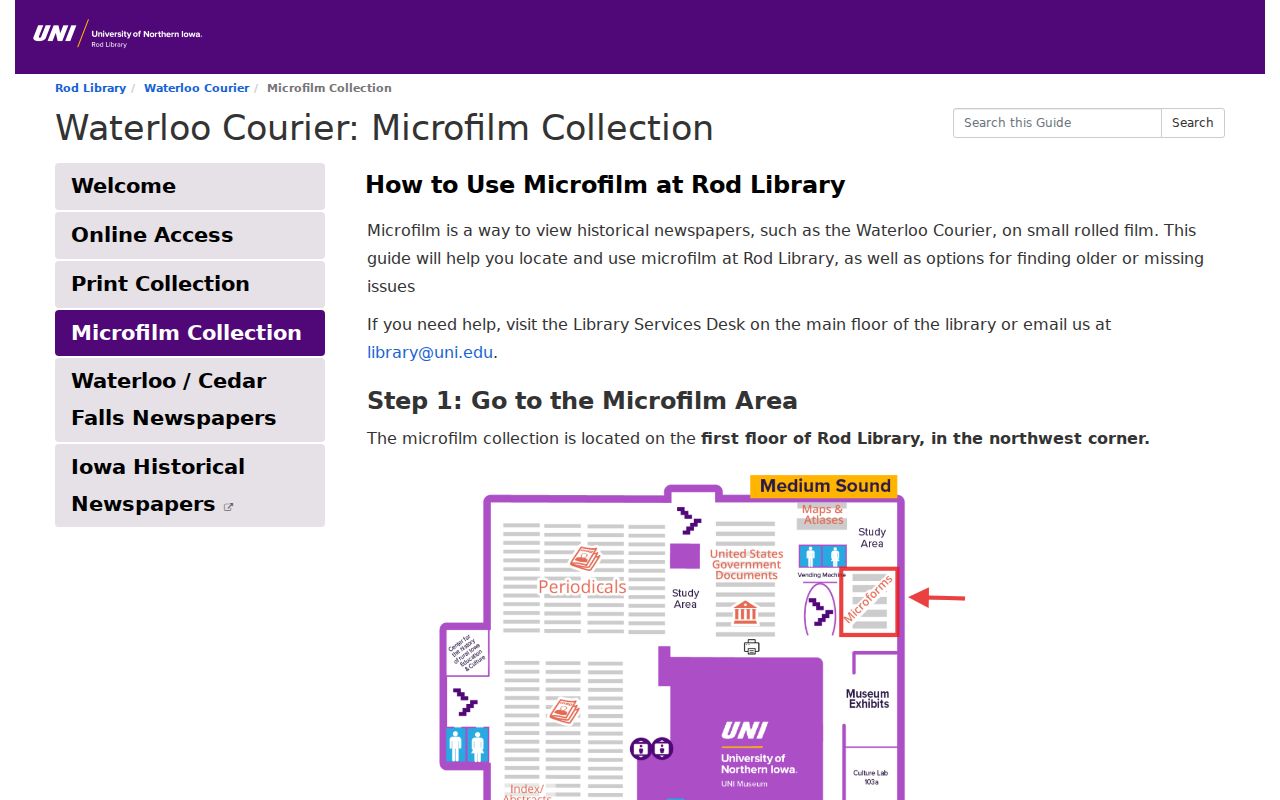
The workflow moves from an edition date to a nearby notice while preserving the newspaper title, issue date, and page.
The UNI historical newspaper guide identifies more Iowa routes.

A news item may confirm an event or association. It should not turn a shared surname into an identity match.
Trace Waterloo Families Across Editions
Follow one household in small, documented steps. A person’s absence may mean a move, death, missed edition, spelling change, or choice not to appear. It does not prove any one event. Compare the same name and address across nearby books, then use a census year, news item, probate series, or land record as an independent check.
- Begin with the strongest known year and copy the entry exactly.
- Check the edition before and after it, noting moves and spelling shifts.
- If an address-order section exists, inspect the address without assuming all occupants were listed.
- Pair the sequence with the nearest census year and a dated Courier search.
- Cite the edition, page, format, and repository so the work can be repeated.
A modern address question belongs in the Waterloo street directory workflow. Historical city directories suggest occupancy, while current GIS and land records answer different questions.
Extend Waterloo Directory Research
The State Historical Society’s Black Hawk County holdings reach beyond directory listings. They include naturalization declarations from 1855 to 1940, an index from 1853 to 1906, probate and vital series, recorder abstracts, deeds, and transfer books. These may distinguish same-name people or explain a move the directory cannot resolve.
The SHSI county-series page shows the archival route.
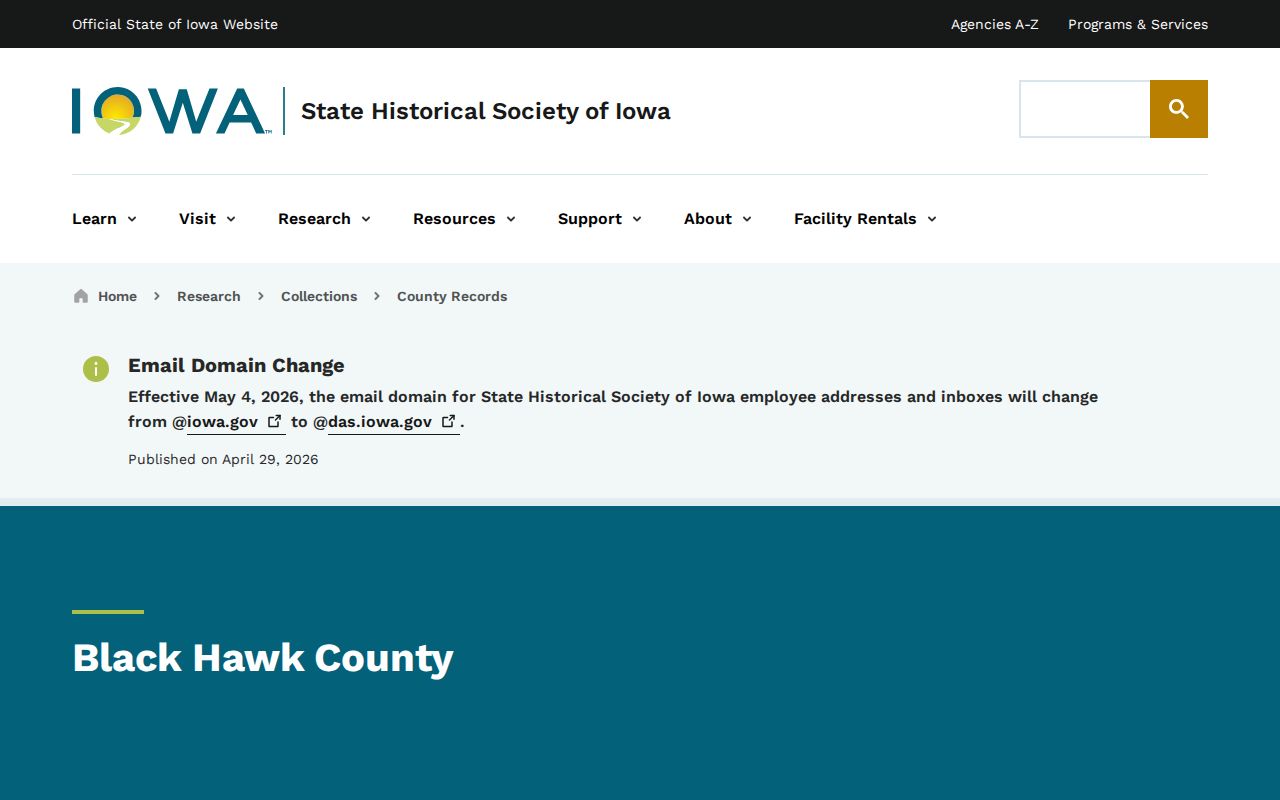
Each series has its own span and form. Name the series, date, volume or reel, and custodian instead of citing “the courthouse.”
FamilySearch also catalogs ten reels of Recorder abstracts from 1852 through 1947, plus statewide birth, death, marriage, and naturalization collections. Account and image access vary. A catalog entry or transcription remains an index lead until checked against an image or original.
See Historic Waterloo Streetscapes
Grout adds context a city directory cannot fit in one line. Its holdings include downtown photos from the 1950s and 1960s, East Side residential and commercial images, West Side commercial views, schools, churches, stores, business histories, maps, Sanborn maps, and plats. These can identify a block, corridor, or institution named in an entry.
Access is part of the plan. Grout describes appointment-only research, a $5 reading-room charge, and timed request charges. Contact staff with the year, street, business, school, or church already narrowed. A photograph may show a place, but visual resemblance cannot identify an uncaptioned person.
Check Waterloo Directory Archive Access
Archive availability changed in 2026. The State Historical Society reported a compact-storage renovation, temporary storage, and limits on some collections, with appointments requested at least five days ahead. Its Iowa City center had closed at the end of 2025, while staff evaluated requests amid relocation issues. County records remain in the legal custody of Iowa’s counties even when a film copy sits elsewhere.
Confirm the item, repository, appointment, and current status before travel. A Waterloo directory citation should distinguish a volume, microfilm copy, digital item, archival series, and certified county copy. They can point to the same event while carrying different weight.