
Waterloo Search Notes That Hold Up
Write down the exact portal, field, date, and custodian for every useful match. Save the case, parcel, instrument, volume, page, or edition identifier. A later search can then be repeated without turning a tentative name match into a fact. This short habit matters when Waterloo records move between a city layer, county office, library reader, and state archive.
Finding Waterloo Residents Step by Step
Begin with the kind of fact already known. A full address can be checked in Waterloo's city address layer, while a full name may fit the Iowa Courts docket or Iowa Land Records party index. Ownership, registration, and occupancy are not synonyms. This residents directory works best as a chain of dated clues rather than a single answer.
- Normalize the street number and name with the city address layer or USPS.
- Check the county property route for an owner, parcel, and mailing address.
- Search deeds by party, date, document type, and Black Hawk County.
- Use court or voter tools only with the details each official form requires.
- For past households, move to city directories, newspapers, probate, and archival books.
The city's Address Points layer shows the structured starting point.
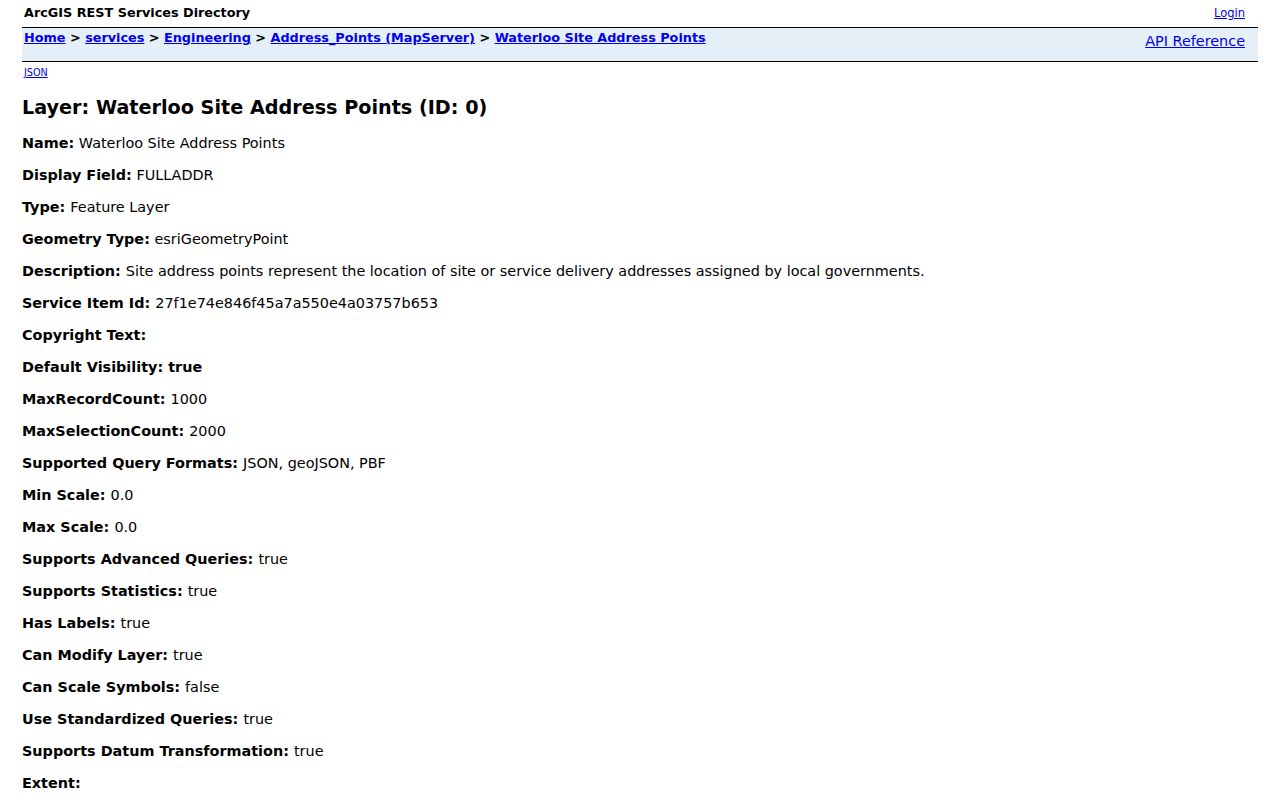
Its fields distinguish an address from a person and give the next search a consistent street form.
Waterloo Address Records Come First
The City Engineering layer uses FULLADDR as its display field and exposes street number, full street name, municipality, ZIP, postal community, status, and point type. A point may represent a House, Utility Asset, or another coded location. Its status may be Current, Pending, Temporary, Retired, or Other. Those distinctions stop a retired point or utility feature from becoming a false household lead. The REST query can return JSON, GeoJSON, or PBF and caps a request at 1,000 records. It validates a civic place. It does not establish who is inside it.
| Field | Meaning in a Waterloo search |
|---|---|
| FULLADDR | City-formatted complete address |
| MUNICIPALITY / Post_Comm | Legal municipality and postal community |
| POINTTYPE | House, utility asset, or another feature |
| STATUS | Current, pending, temporary, retired, or other |
| Zip | Postal code attached to the point |
A parcel is a mapped unit of land, not a household. After the address check, use the county offices to identify the record that answers the real question.
Waterloo Residents Records Offices
Black Hawk County divides the record trail among offices. The Assessor appraises property but does not collect tax. The Auditor handles tax calculations and transfer books. The Treasurer handles installments and offers a parcel search. The Recorder keeps recorded transfers and certified instruments. Waterloo residents should verify the exact fact with the right custodian.
Black Hawk County Recorder
316 E 5th St, Room 208
Waterloo, IA 50703
319-833-3012
The Recorder page confirms its land and vital-record routes.
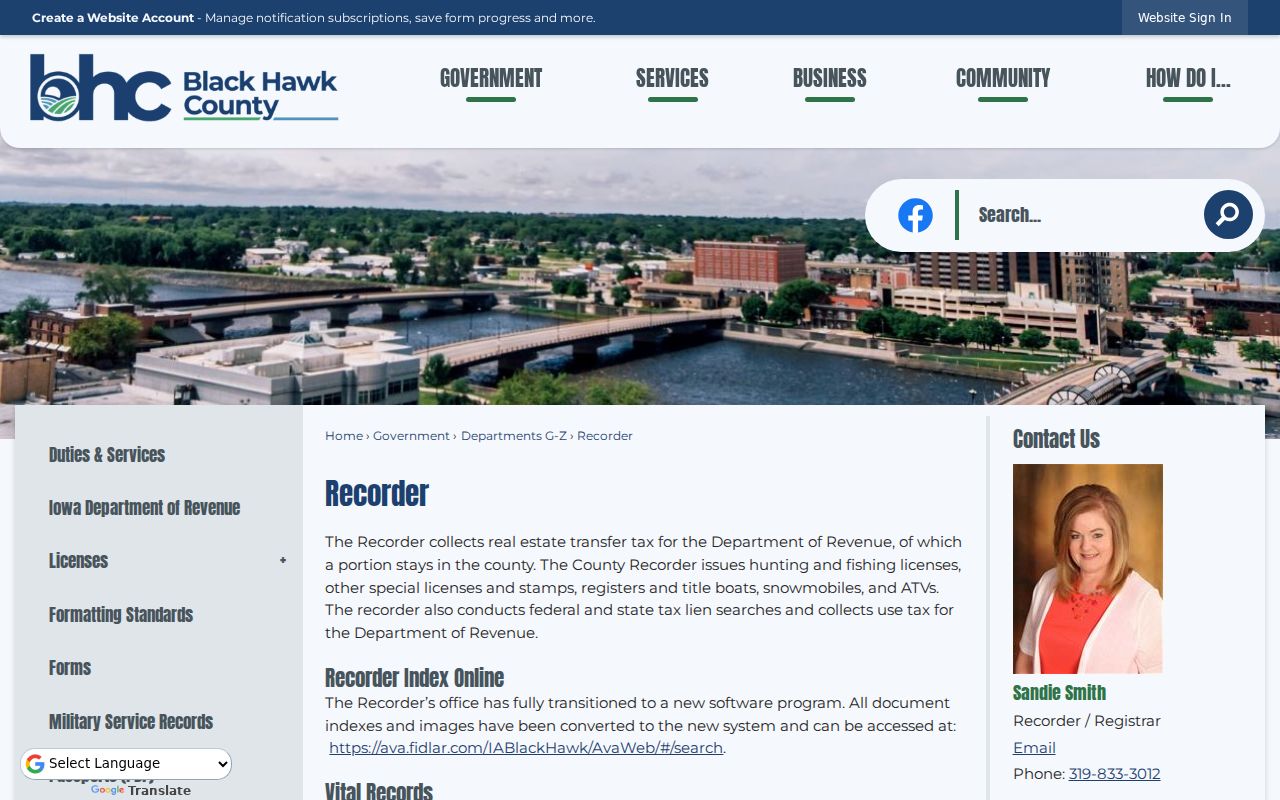
The office is the fallback when AVA does not reveal an old span or usable image. Its counter is open Monday through Friday, 8:00 a.m. to 4:30 p.m.
Waterloo Deed Directory Searches
Iowa Land Records searches recorder indexes across all 99 counties. Select Black Hawk County, then use a recorded date range and a grantor or grantee name. A grantor gives an interest away; a grantee receives it. Document filters include deeds, mortgages, releases, liens, easements, contracts, plats, and other instruments. Basic searching is open without registration, while advanced controls and saved work may require an account. The Black Hawk earliest online date was not stated during research, so older work should continue through the Recorder and archival series.
| Search control | Local use |
|---|---|
| County | Required; select Black Hawk |
| Recorded dates | Narrow a likely transfer period |
| Party | Choose grantor or grantee and enter a name |
| Document type | Limit deeds, mortgages, liens, or plats |
| Image filter | Show entries with an image |
The Iowa Land Records search exposes these controls.
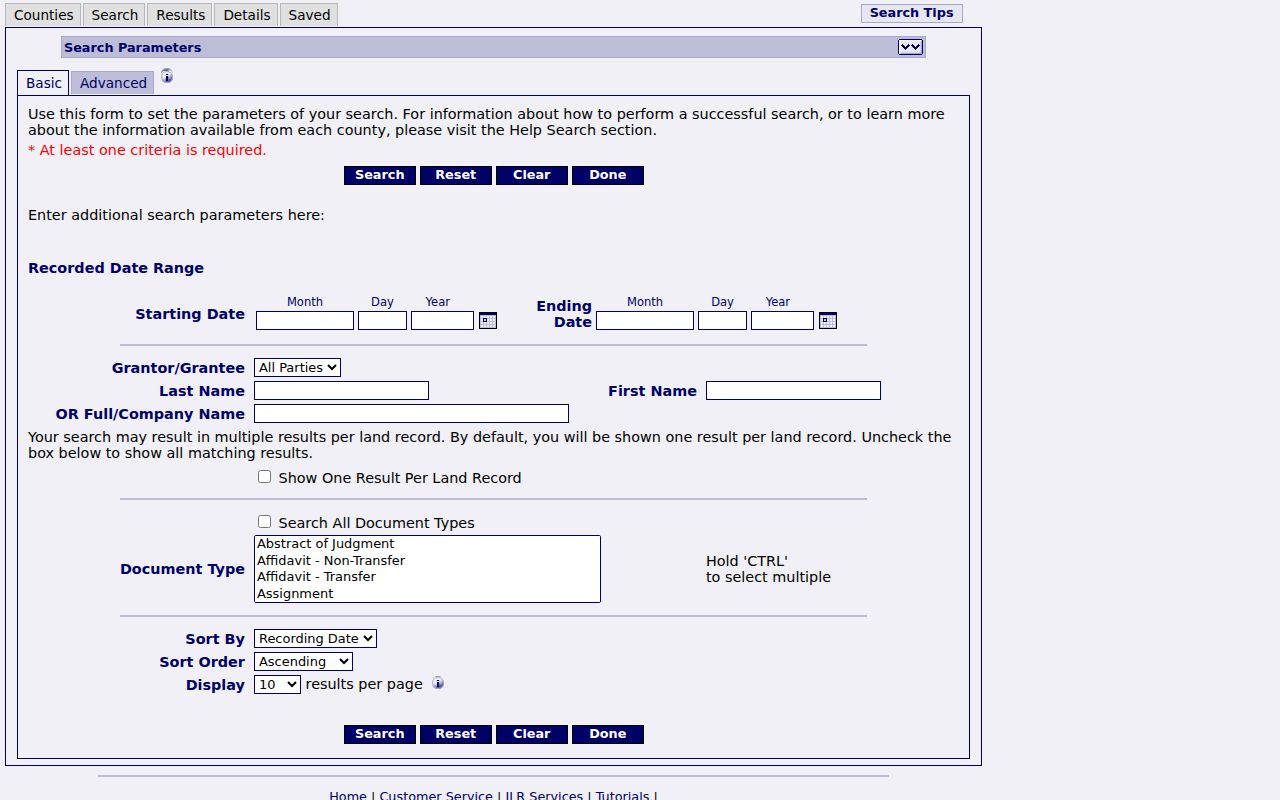
Its “Show One Result Per Land Record” box condenses party matches. Clearing it can reveal each matching party tied to an instrument.
Waterloo Directory Sources Compared
No current roll lists every person in Waterloo. Each source has a limited subject and date. A property roll points to an owner, not every occupant. A voter lookup confirms a registration only when the required facts match. A deed index identifies parties to instruments. Court results identify case parties, not an address book.
| Waterloo source | What it confirms | Keeper | Route |
|---|---|---|---|
| Address points | Civic address and mapped status | City Engineering | Free REST layer |
| Property mapping | Parcel and assessment context | County Assessor | Beacon and office |
| Recorded instruments | Parties, type, recording date | County Recorder | AVA, ILR, counter |
| Voter status | A detail-matched registration | Iowa SOS | Online form |
| Old directories | Past listing by edition | WPL and Grout | Library or archive |
Commercial people-finder material may merge stale files and conceal the source. Official rolls are narrower but identify a custodian. Obtain the original or certified copy when proof matters. The Black Hawk real-estate roles are not interchangeable, a useful Waterloo comparison that prevents a tax-mail address from being mistaken for a deedholder or occupant.
Waterloo Court Record Lookup
Iowa Courts Electronic Docket Record Search offers a free public docket. Searches may use name, date of birth, case ID, citation number, county, and case type. Same-name hits need care. Match independent details, read the disposition, and remember that a filing is not proof of the claim within it. Some documents and fields are available only at a courthouse terminal or through subscriber access. Sealed and confidential material stays out of public results.
The official Iowa Courts search is the proper entry point.
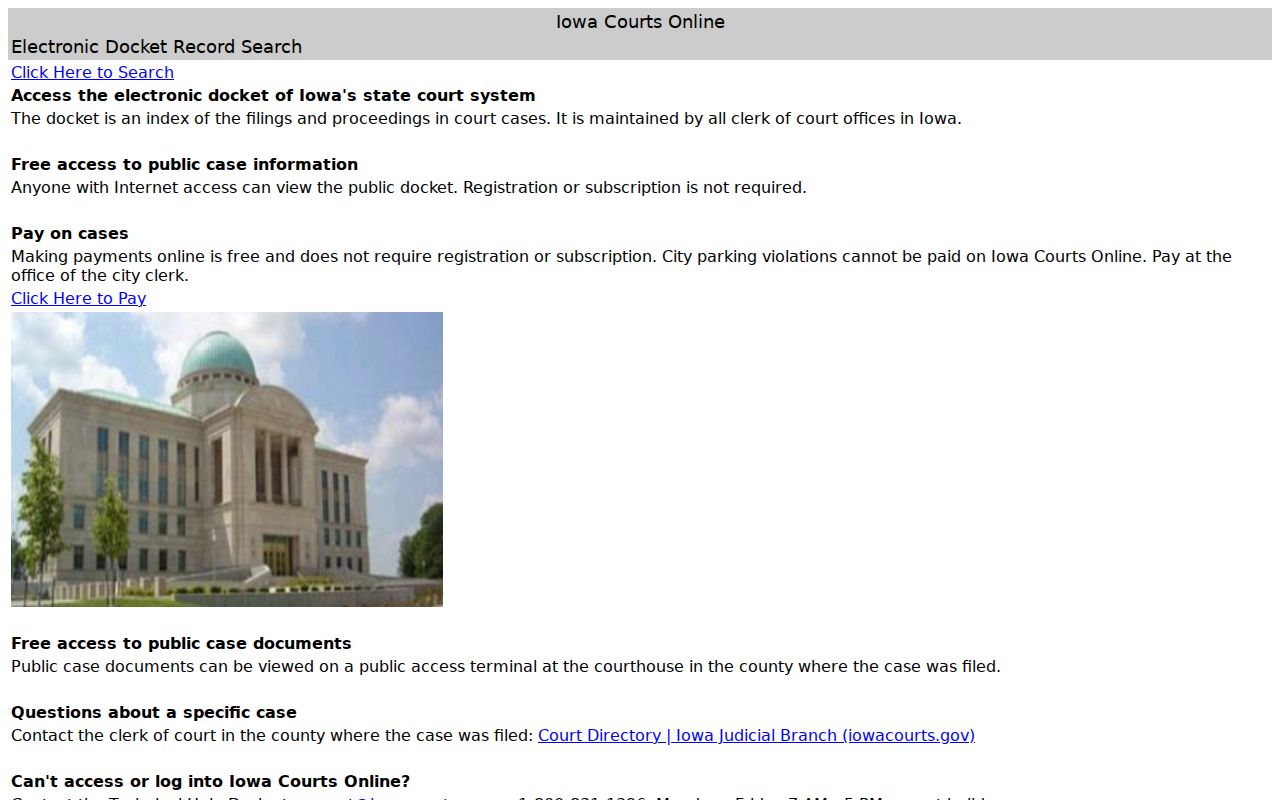
Read case number, county, type, party role, status, and disposition together before connecting a result to a Waterloo resident. For one named person, use the focused Waterloo resident lookup workflow.
Waterloo Vital Records Access
Iowa vital registration began July 1, 1880. The state registrar uses a closed system and entitlement rules for certified copies. Iowa Code section 144.43 treats some county-custody records differently and opens archival records by age: birth, marriage, and divorce at 75 years, and death at 50 years, unless an entitled person qualifies sooner. Iowa HHS lists a $20 certified search fee and sets ID, relationship, notarization, mail, in-person, and approved vendor steps. A public index clue is not the same as eligibility for an official copy.
Review current routes on the Iowa HHS Vital Records page.
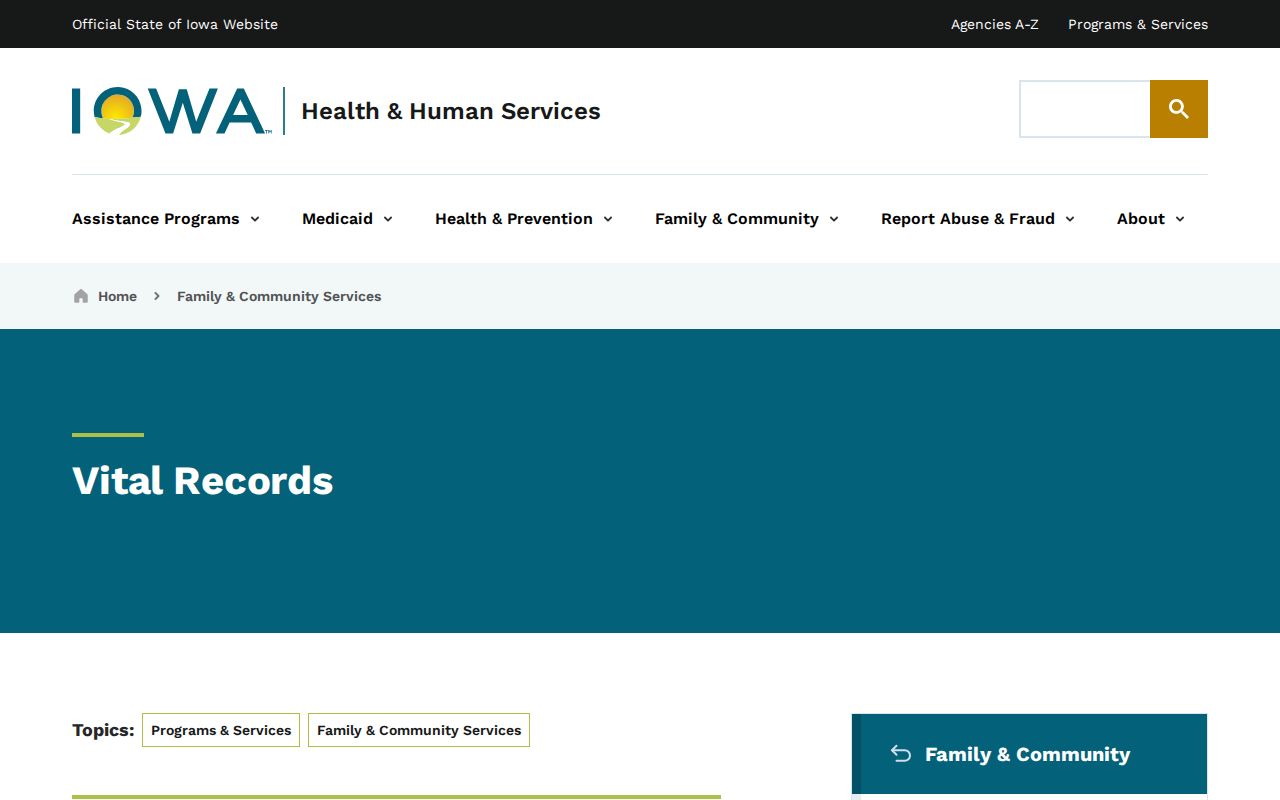
The state route and Black Hawk County Recorder route cover different custody and issuing questions.
Waterloo Voter Directory Limits
The Iowa Secretary of State form asks for first name, last name, ZIP, house number, and full birth date. It verifies details already known. It is not a browseable Waterloo residents list. Iowa Code Chapter 48A makes registration records public under limits, excludes sensitive identifiers, bars commercial use of voter lists, and makes requester logs public. A March 2026 state directive also stressed that residential and mailing addresses are not interchangeable. A person without a conventional residence may use the place where the person regularly sleeps under Iowa law.
Use the official Iowa voter lookup.
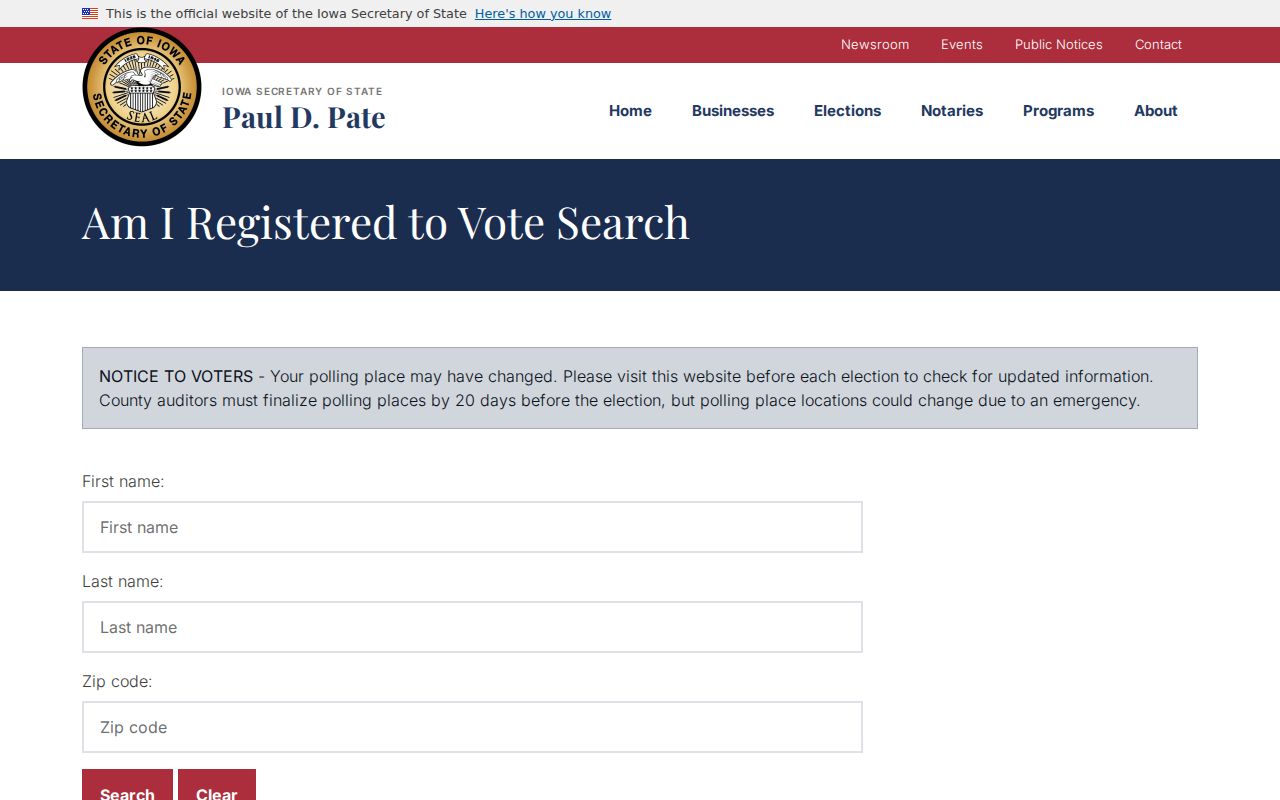
A match confirms election registration information, not property ownership or uninterrupted occupancy.
Waterloo Residents in Old Directories
Waterloo Public Library lists city directories from 1873 through 1991, along with newspaper and microfilm resources. Editions can place a named householder at an address, show a spouse or occupation, and support comparisons across years. They are snapshots. A skipped edition does not prove a move, and an entry does not replace a deed or vital record. Grout lists recent volumes for 1998, 2000, 2003 to 2004, and 2006 to the present; unlisted years are archive questions, not permission to assume continuous coverage.
The detailed shelf is described on the Waterloo city directory page. Start with WPL local history.
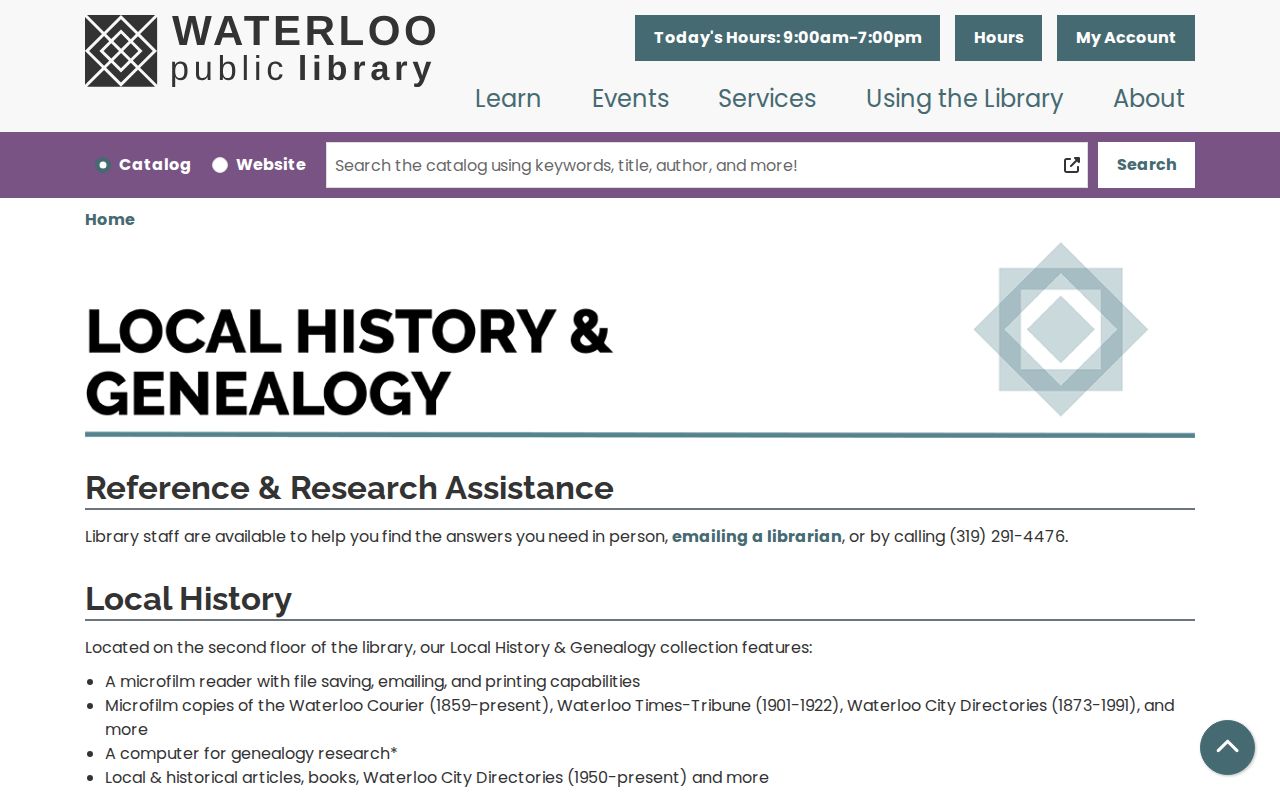
Its microfilm reader can support directory and newspaper checks while preserving edition, date, and page.
Waterloo ZIP Directory Context
Waterloo's postal city spans ZCTAs 50701, 50702, and 50703, but a ZIP is not the legal city line. Census guidance notes that the Waterloo postal area can include parts of Elk Run Heights, Hudson, and unincorporated Black Hawk County. Washburn can use 50702 and still be tabulated as Washburn. Check a full address through USPS, then compare the city's municipality and postal-community fields. This local geography quirk matters because a ZIP-only result can assign the right mail route while implying the wrong city jurisdiction.
The USPS ZIP Code Lookup confirms postal formatting.
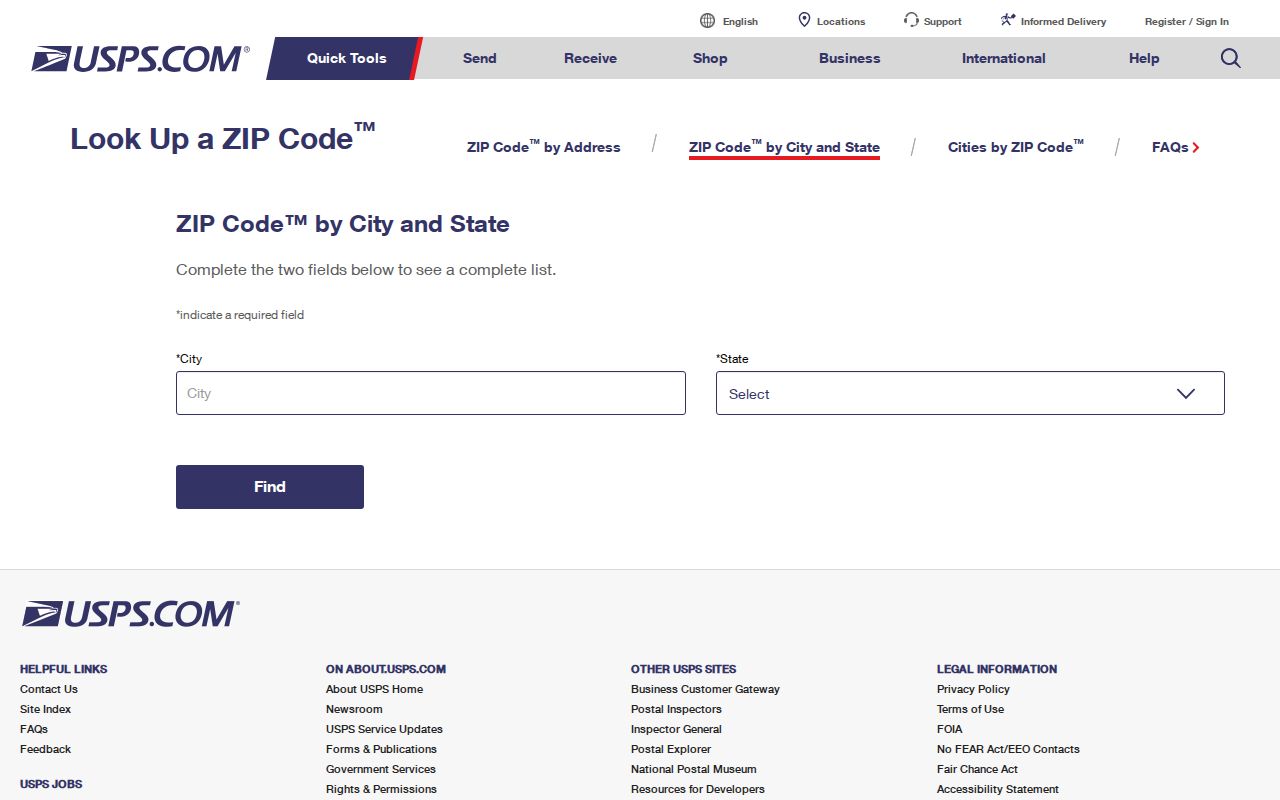
The result narrows a postal route. It does not prove a person or company is at that address.
Waterloo Custody Records Change
The Black Hawk County Sheriff's “Who's In Jail” roster is a current-custody source with name, charge, and booking-date search context. An arrest is not a conviction, and custody can change quickly. Iowa Department of Corrections and the state registry serve different public-safety purposes with their own warnings. Record the access date and verify status with the agency. Do not merge a current custody notice into a general profile.
The Black Hawk County jail roster shows the county route.
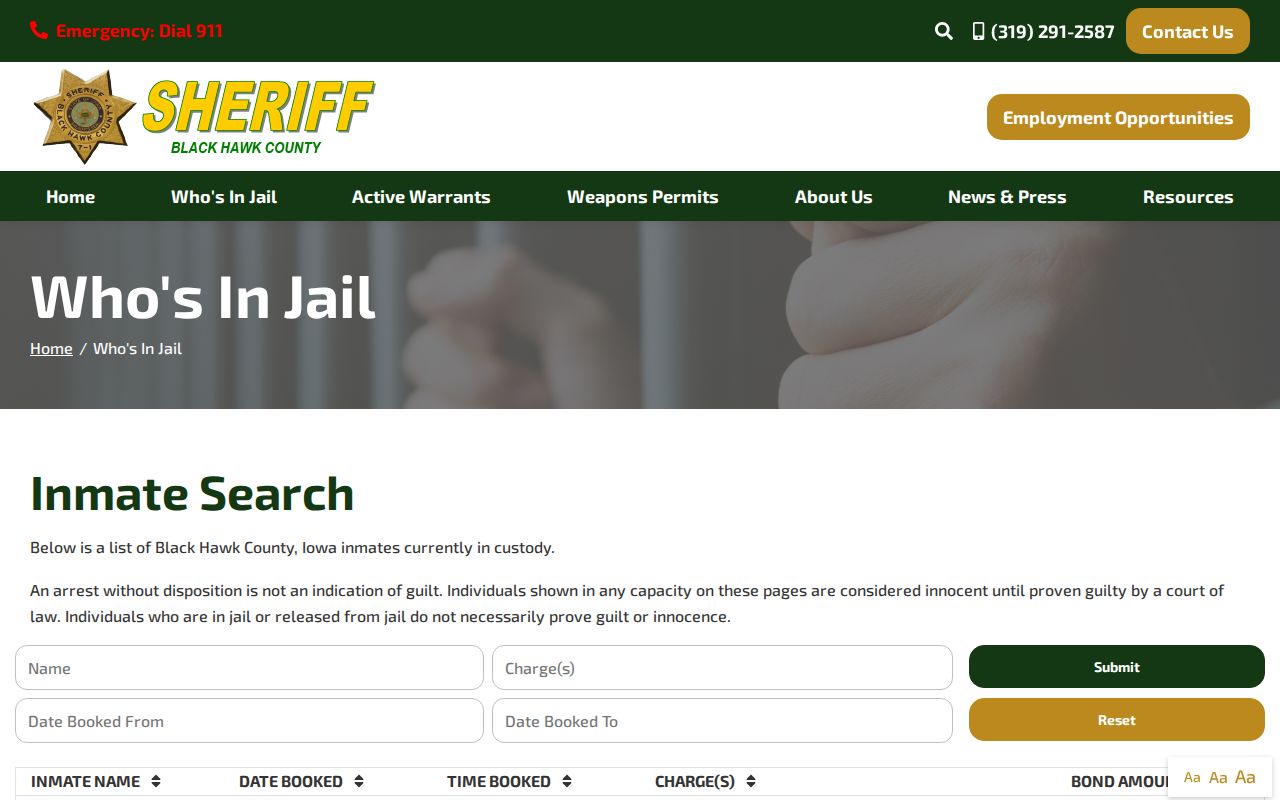
Its narrow scope keeps it separate from the main Waterloo residents directory.
Waterloo Record Terms Decoded
A few terms help the search move between city, county, and archive sources without treating unlike records as equals.
- Parcel
- A mapped unit of land with an identifier, not a household.
- Roll
- A list kept for one purpose, such as assessment or registration.
- Index
- A finding aid that points to a record but may omit the full image.
- Criss-cross directory
- A directory organized by address rather than only by surname.
- Certified copy
- An office-issued copy authenticated by the legal custodian.
Keep the record type, keeper, edition or recording date, and access date in every research note.
Waterloo Records Cross Eras
Waterloo became the county seat after Cedar Falls first held that role. The Recorder's territorial origin dates to 1839, before Black Hawk County formed in 1843. Early land clues can therefore predate the county books a researcher expects. A courthouse building date also does not set the start of a series. Recorder books, AVA, Iowa Land Records, City GIS, library microfilm, Grout holdings, and State Historical Society series each preserve a layer.
The record groups bridge time. Original-entry abstracts lead into nineteenth-century deed and town-lot books. Probate, naturalization, marriage, directory, and newspaper collections can distinguish people with similar names. Auditor transfer volumes extend land and lot trails into the late twentieth century. Current AVA, land records, dockets, GIS, and HHS routes then take over. Note whether a source is an index, abstract, image, transcription, or certified copy, since each has a different level of detail and authority.
In 2026, State Historical Society compact-storage work temporarily limited some collections and led staff to request appointments at least five days ahead. Confirm the repository, appointment, and availability before travel. The legal custody of county records remains with the county even when an archival copy or microfilm sits elsewhere.
Protecting Waterloo Resident Records
Iowa Safe at Home gives eligible participants a substitute address and confidential voter-registration path. It does not erase real-estate records. Court sealing, HHS entitlement, voter confidentiality, library patron privacy, and agency correction each follow distinct rules. Use the remedy that fits the custodian instead of assuming one removal request reaches every copy.
The Iowa Safe at Home program explains its protections.
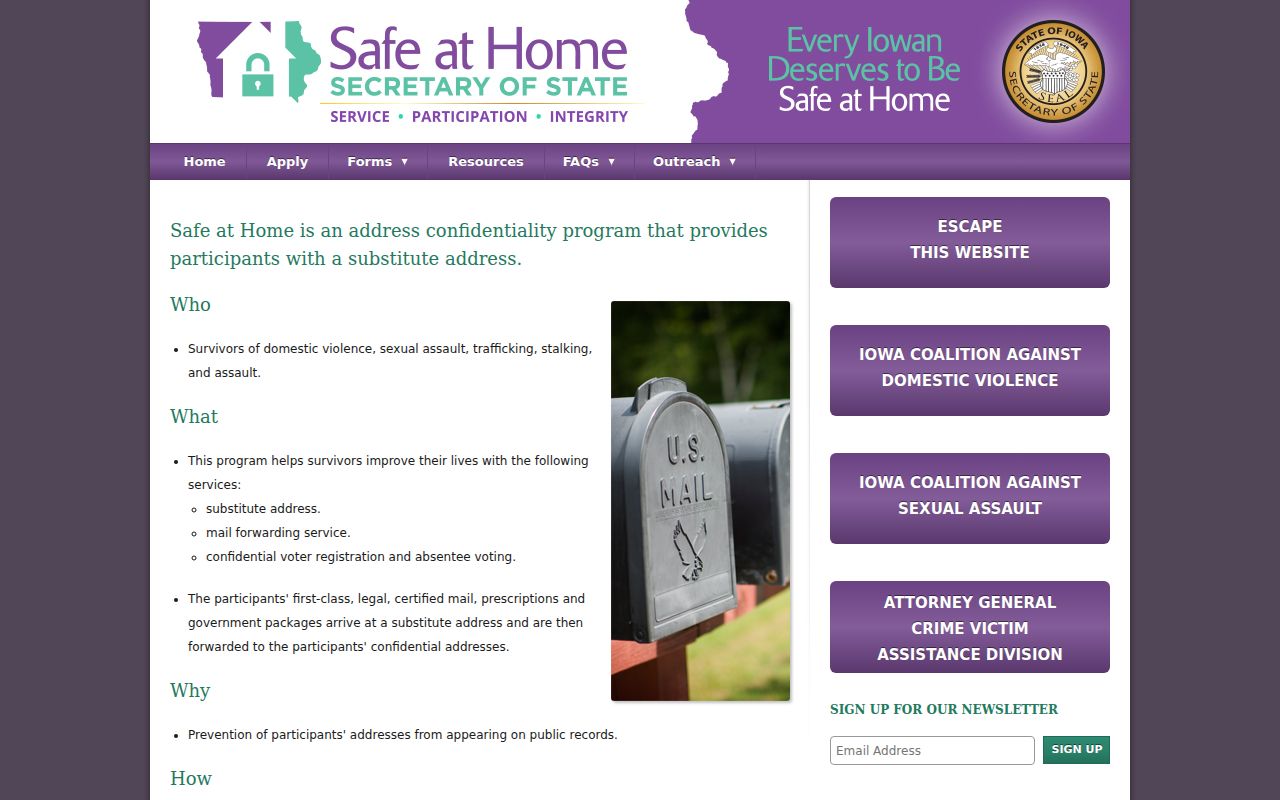
The program protects a mailing and voter path while other records remain governed by their own laws.
Lawful use. Use Waterloo records for lawful personal research, never to stalk, harass, intimidate, or harm another person.